EARLY LIFE
Red Rum began his career on the flat before finding his purpose over jumps. Nothing in those early seasons suggested the horse he would become at Aintree.
The Historical Record
The horse who owned the National.
This page concerns the real racehorse Red Rum. It is presented separately from the fictional events and characters of the novel. Historical material is kept deliberately brief and factual, and is reviewed before publication — no quotes, statistics or events are invented here.
The Early Years
Long before Red Rum became the most famous Grand National horse of them all, he was an Irish-bred bay gelding whose future was far from certain.
Red Rum was foaled in Ireland on 3 May 1965 and bred by Martyn McEnery. Sold as a yearling for just 400 guineas, he was initially regarded more as a horse with speed than as a future long-distance steeplechasing legend.
Remarkably, his first race came at Aintree, the course that would later make his name immortal. As a two-year-old, he ran in a five-furlong selling race and dead-heated for first place.
His early career took him from the Flat to hurdles and fences, and through several training yards. By the age of seven he was experienced, but far from an obvious future champion. He was also suffering from pedal osteitis, a painful condition affecting the bones of the foot that threatened his racing career.
Then came the turning point.
In August 1972, Red Rum was offered for sale at Doncaster. Southport trainer Donald “Ginger” McCain bought him for 6,000 guineas on behalf of businessman Noel le Mare, who had dreamed for years of owning a Grand National winner.
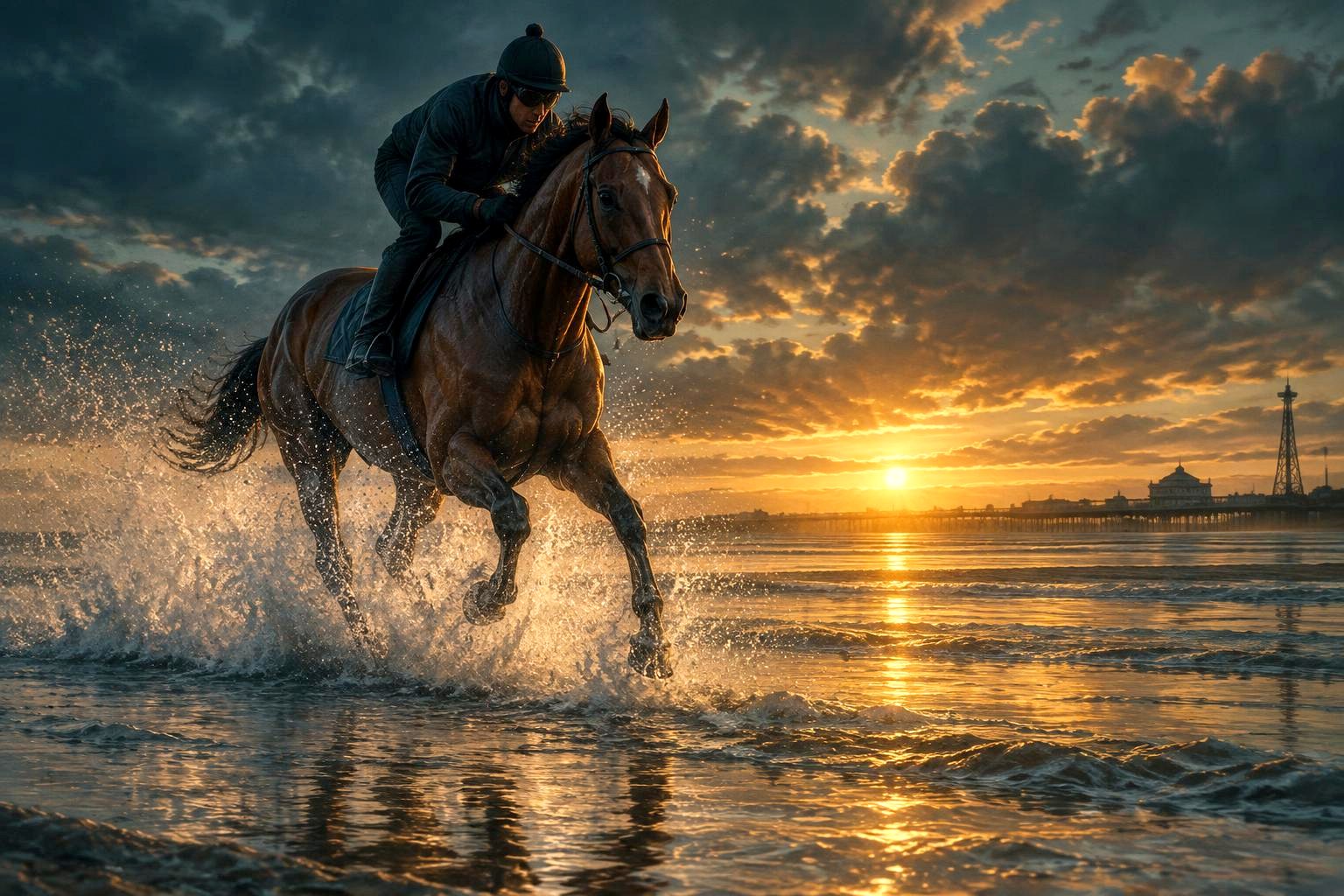
Almost immediately, the purchase looked risky. Red Rum showed signs of lameness soon after arriving in Southport. McCain trained his horses on the wide sands of Southport beach, working them across the softer surface and through the seawater. The method appeared to suit Red Rum perfectly, easing the problems with his feet and allowing his ability to emerge.
Red Rum won his first five races for McCain. Less than a year after being bought at Doncaster, he arrived at Aintree for the 1973 Grand National. What happened next turned an ageing, unfashionable gelding into a sporting immortal.
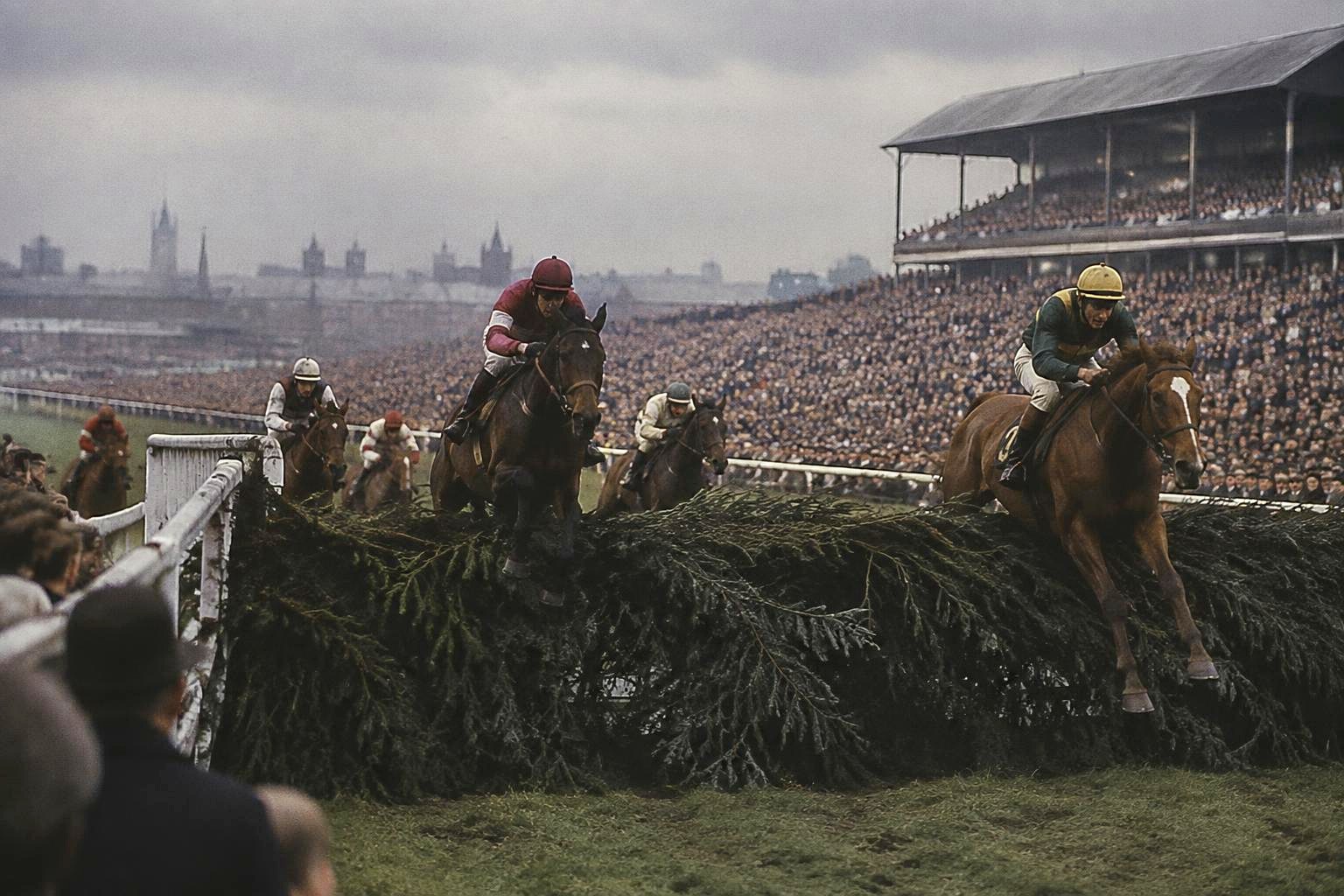
He chased down the brilliant Crisp to win in a then-record time, returned in 1974 to win again, and that same year also won the Scottish Grand National. After finishing second at Aintree in 1975 and 1976, he came back at the age of twelve in 1977 to claim an unprecedented third Grand National victory.
Three victories. Two second places. Five consecutive Nationals finishing first or second.
The horse bought for 6,000 guineas at Doncaster had become one of the greatest names in racing history.
Red Rum
Red Rum began his career on the flat before finding his purpose over jumps. Nothing in those early seasons suggested the horse he would become at Aintree.
Trainer Donald 'Ginger' McCain bought Red Rum on behalf of owner Noel Le Mare, and the partnership between trainer, owner and horse became one of the most celebrated in British racing.
McCain famously trained Red Rum on the sands at Southport, using the sea and the beach gallops as part of the horse's preparation — an approach that became part of his legend.
Red Rum's relationship with the Grand National course was unlike any horse before or since. He ran in five consecutive Nationals and finished first or second in every one of them.
After retiring, Red Rum remained a public figure, appearing at events and leading Grand National parades. He is buried at the winning post at Aintree, where he is commemorated to this day.
Five Grand Nationals
Red Rum won his first Grand National, catching the long-time leader Crisp close to the line in a finish that is still replayed today.
1973 Grand National — Watch NowHe returned to Aintree and won again, this time carrying top weight — a second National victory in successive years.
1974 Grand National — Watch NowBeaten into second place, but home again in front of almost every other horse in the race.
1975 Grand National — Watch NowAnother runner-up finish, extending a record of consistency over the National fences that remains unmatched.
1976 Grand National — Watch NowA third Grand National victory, and the performance that made him a national figure far beyond racing.
1977 Grand National — Watch NowThree wins. Two seconds. Five extraordinary Nationals.
Millions remember the name.
Now read the novel — £21.99